Sentry (self-hosted): Source-available alternative to Bugsnag in 2026
The self-hosted version of Sentry itself: error and performance tracking in production with smart exception grouping, for all major languages.
The code is public and free to self-host, but the license isn't OSI open source — check its exact terms before any commercial use.
Audit Snapshot
View notes →License — Not verifiable on GitHub
GitHub — Active
Latest release — 26.9.0 · 27 days ago
Docker Compose — Official installer, no compose
Production — Not production-tested by AltFreeStack
Sentry (self-hosted) vs. Bugsnag
Pros
- It's the original product, with no feature cuts
Things to consider
- Heavy stack: needs plenty of RAM and several services
Quick Docker installation guide
This tool doesn't install via a plain docker-compose.yml — it uses the project's own official installer. Review it before running it. See the full step-by-step guide →
💡 Official SaaS or self-hosted with AltFreeStack?
- On the official cloud: a recurring monthly fee and usage limits on Bugsnag.
- On your own VPS: free to self-host on your own server with no usage limits — no more monthly SaaS fee, though the license isn't OSI open source (check it before commercial use).
# Sentry self-hosted se instala clonando su repo oficial y ejecutando
# install.sh, que genera un docker-compose.yml completo (Postgres, Redis,
# Kafka, ClickHouse...):
git clone https://github.com/getsentry/self-hosted.git
cd self-hosted && ./install.sh
This docker-compose corresponds to an actively maintained project — last commit today.
This docker-compose not working for you? Report it on GitHub →Technical profile
- License
- FSL-1.1 (pasa a Apache-2.0 a los 2 años)
- Category
- Monitoring, Logs & Errors
- Replaces
- Bugsnag, Datadog
- Tech stack
- PythonClickHouseKafka
Key features
- Smart grouping of repeated errors
- Performance monitoring traces
- Official SDKs for all major languages
Preview
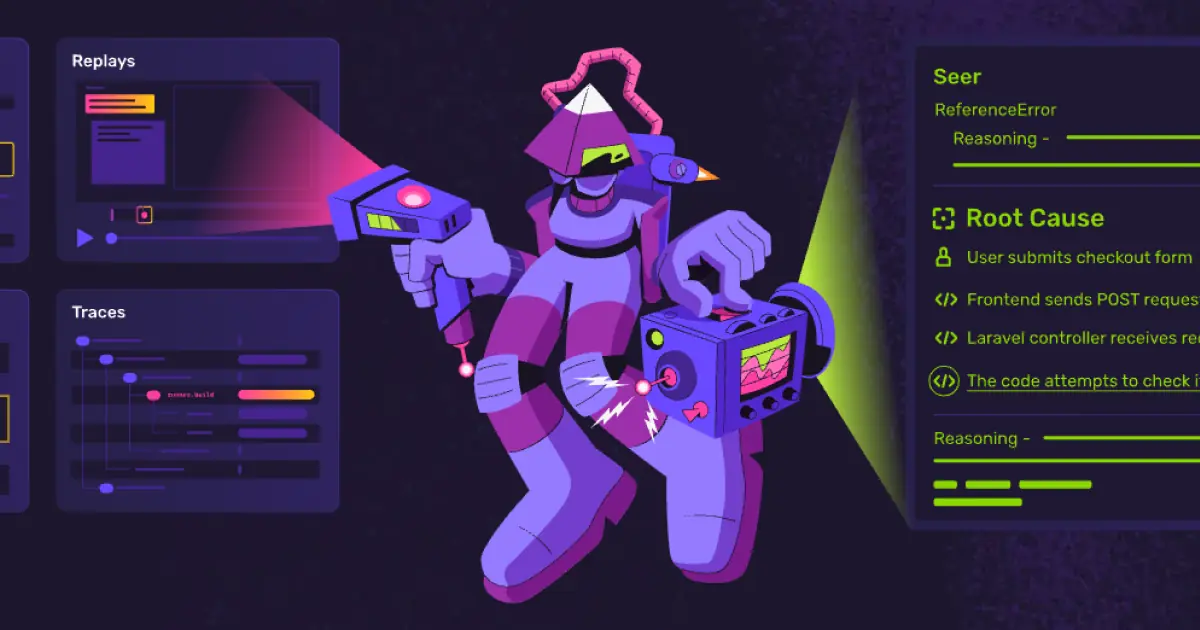
Public image provided by Sentry (self-hosted) on its own website.
🌐 Connect your domain with free SSL
Step 1 — Set up the DNS
In your domain registrar's dashboard (Cloudflare, Namecheap, GoDaddy...), create a record:
- Type
- A
- Name/Host
- @ (root domain) or a subdomain, e.g. app
- Content/Value
- Your server's public IP
Wait 5 to 15 minutes for the record to propagate across the internet.
Step 2 — Automatic reverse proxy with Caddy
One single file, no Nginx config or manual certificates — Caddy issues and renews Let's Encrypt HTTPS on its own.
Create a file called Caddyfile:
yourdomain.com {
    reverse_proxy localhost:YOUR_APP_PORT
}
Start Caddy with this command (pulls the image and runs it in the background):
docker run -d -p 80:80 -p 443:443 --name caddy --restart always -v $PWD/Caddyfile:/etc/caddy/Caddyfile -v caddy_data:/data caddy