EspoCRM: Open-Core alternative to Salesforce in 2026
EspoCRM is an open source CRM with lead management, opportunities and sales automation, customizable through a visual entity editor, as an alternative to Salesforce.
Core is open source, but advanced features or enterprise support may be behind a paid tier — check the license.
Audit Snapshot
View notes →License — Discrepancy with GitHub
GitHub — Active
Latest release — 10.0.9 · 14 days ago
Docker Compose — Partial
Production — Not production-tested by AltFreeStack
EspoCRM vs. Salesforce
Pros
- Highly customizable without writing code
Things to consider
- Less modern interface than current SaaS CRMs
Quick Docker installation guide
Copy this docker-compose.yml, adjust the example passwords and run docker compose up -d on your server. See the full step-by-step guide →
💡 Official SaaS or self-hosted with AltFreeStack?
- On the official cloud: $25/mo per user on Salesforce.
- On your own VPS: the core is free to self-host on your own server — no more monthly SaaS fee, though some advanced features stay behind a paid plan.
version: "3.9"
services:
  espocrm:
    image: espocrm/espocrm:10.0.9
    restart: unless-stopped
    ports:
      - "8080:80"
    environment:
      - ESPOCRM_DATABASE_HOST=espocrm-db
      - ESPOCRM_DATABASE_USER=espocrm
      - ESPOCRM_DATABASE_PASSWORD=change-me-mysql-password # must match MYSQL_PASSWORD below
    depends_on:
      - espocrm-db
  espocrm-db:
    image: mariadb:11
    restart: unless-stopped
    environment:
      - MYSQL_ROOT_PASSWORD=change-me-mysql-root-password # REQUIRED: generate a random secret before first run
      - MYSQL_DATABASE=espocrm
      - MYSQL_USER=espocrm
      - MYSQL_PASSWORD=change-me-mysql-password # REQUIRED: generate a random secret before first run
    volumes:
      - espocrm_db_data:/var/lib/mysql
volumes:
  espocrm_db_data:
🚀 Deploy in 1 command
Recommended for beginnersCopy this single command and paste it into your freshly created VPS's console (Vultr, DigitalOcean...). It downloads the script, prints it to your screen so you can see exactly what it's about to do (never a blind direct pipe), and only then installs Docker if needed, writes the files with secrets already generated, and starts everything — no nano, no pasting code blocks.
curl -sSL ".../api/deploy?stack=espocrm" -o deploy.sh && cat deploy.sh && bash deploy.shThis docker-compose corresponds to an actively maintained project — last commit 1 day ago.
This docker-compose not working for you? Report it on GitHub →Technical profile
- License
- GPL-3.0
- Category
- CRM & Support
- Replaces
- Salesforce
- Tech stack
- PHPMySQL
Under the hood
Database
MySQL
Language
PHP
Platforms
Web
Key features
- Visual custom entity editor
- Sales workflow automation
- Lead and opportunity management
Preview
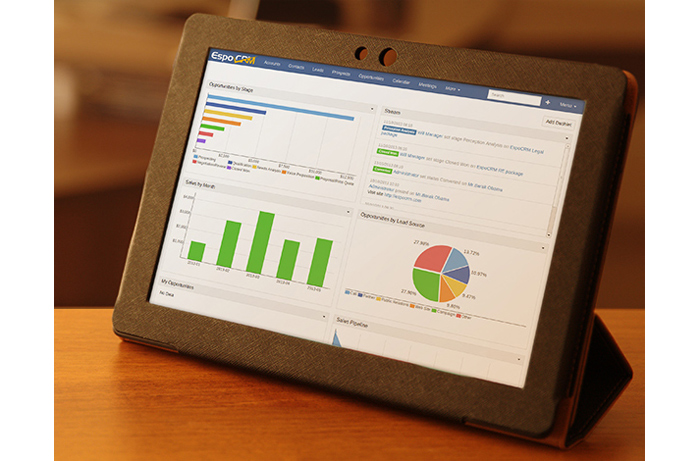
Public image provided by EspoCRM on its own website.
💾 Backups in 3 steps (Day 2)
As long as the ./data folder (the "volume" mapped into the container) exists on your server, your data survives any restart or container update — that's the only thing you need to back up.
1. Create a compressed backup on the server
tar -czvf backup-$(date +%F).tar.gz ./data2. Download it to your computer
From your computer's terminal (not your server's):
scp root@YOUR_IP:~/app/backup-*.tar.gz ./3. Restore in case of emergency
tar -xzvf backup-file.tar.gz🌐 Connect your domain with free SSL
Step 1 — Set up the DNS
In your domain registrar's dashboard (Cloudflare, Namecheap, GoDaddy...), create a record:
- Type
- A
- Name/Host
- @ (root domain) or a subdomain, e.g. app
- Content/Value
- Your server's public IP
Wait 5 to 15 minutes for the record to propagate across the internet.
Step 2 — Automatic reverse proxy with Caddy
One single file, no Nginx config or manual certificates — Caddy issues and renews Let's Encrypt HTTPS on its own.
Create a file called Caddyfile:
yourdomain.com {
    reverse_proxy localhost:8080
}
Start Caddy with this command (pulls the image and runs it in the background):
docker run -d -p 80:80 -p 443:443 --name caddy --restart always -v $PWD/Caddyfile:/etc/caddy/Caddyfile -v caddy_data:/data caddy